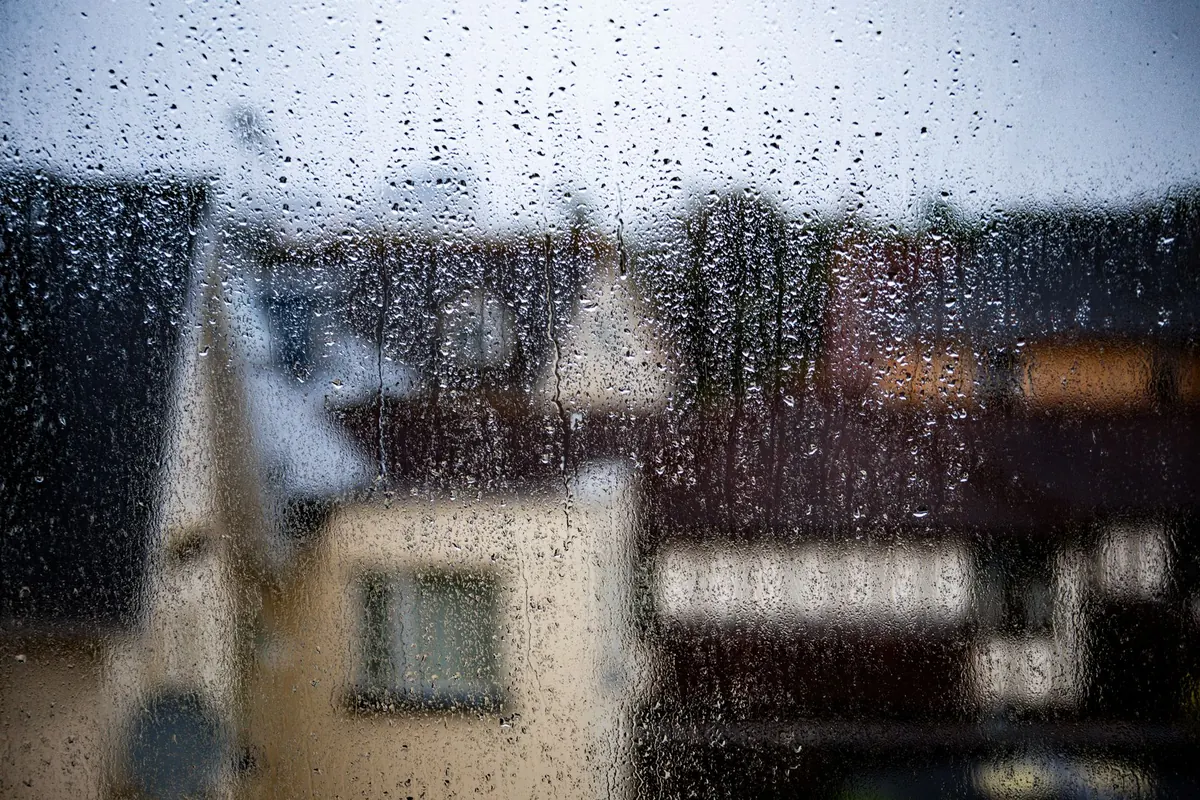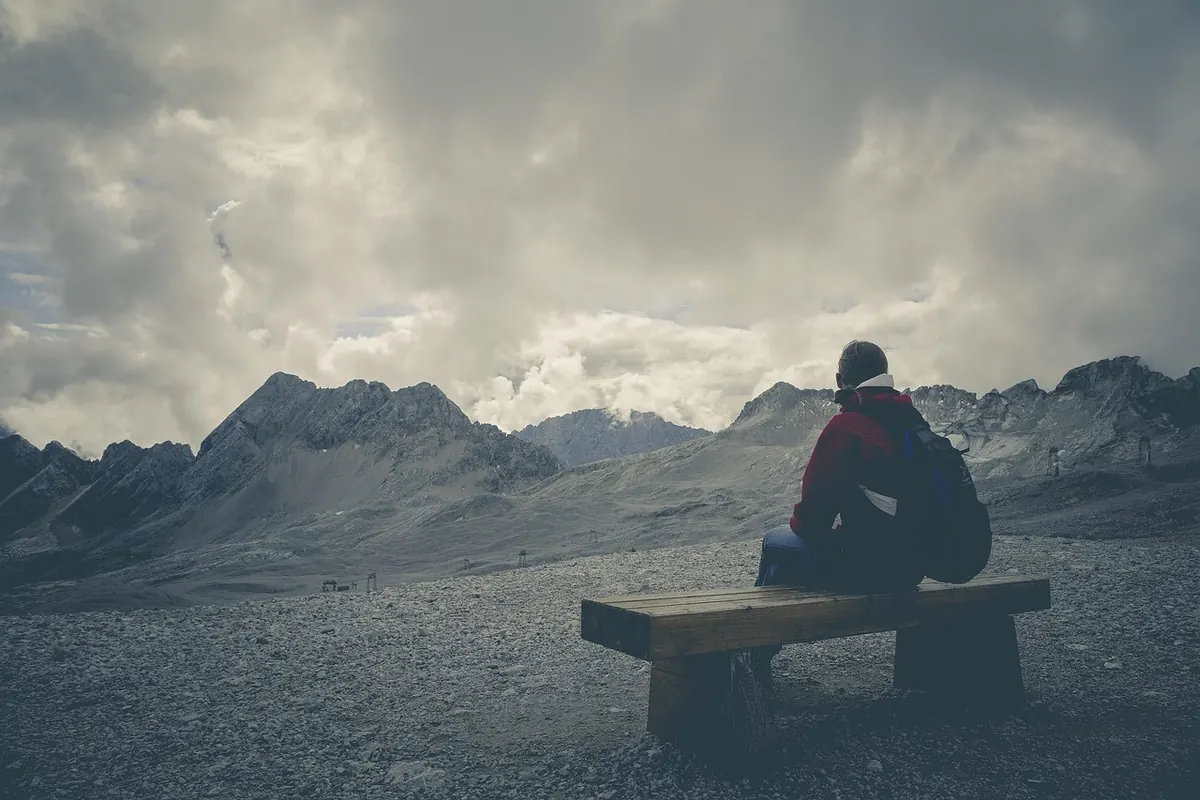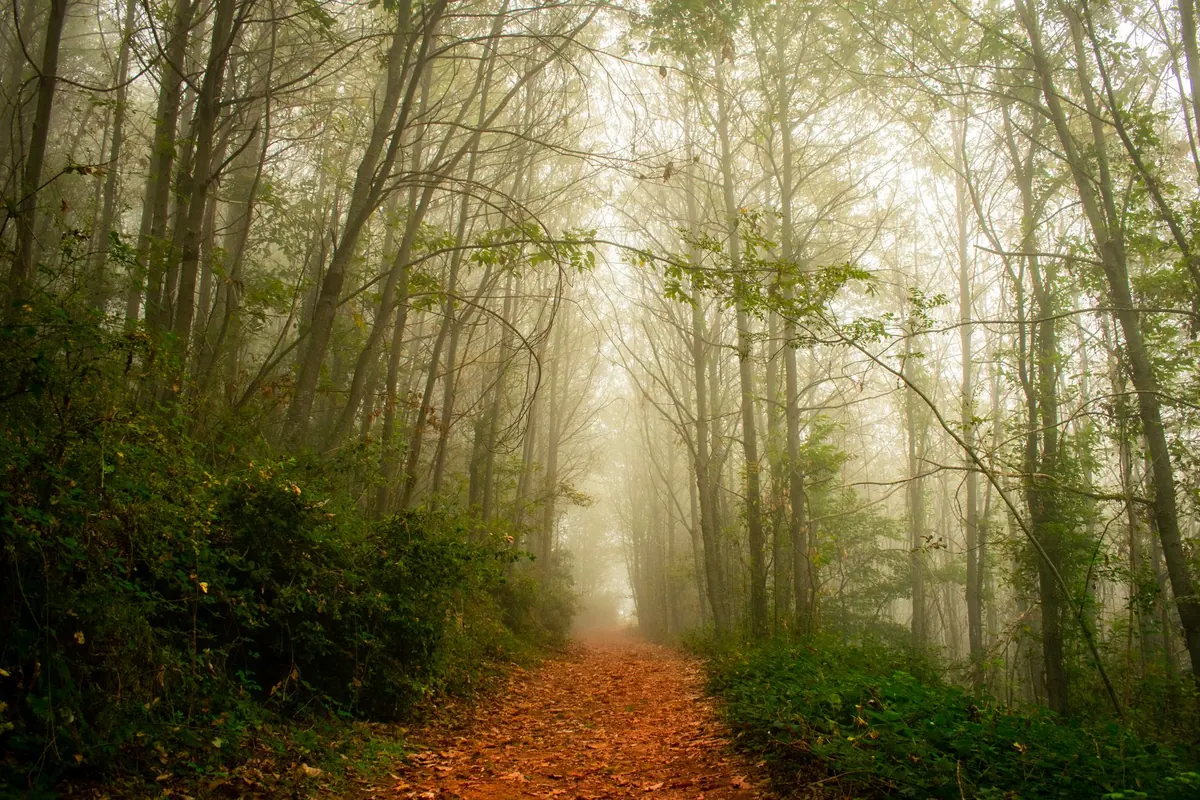
Fog does something to a landscape that no filter can. It removes the parts you would normally use to make sense of a place — the crisp roofline, the far ridge, the fence running toward a gate you know — and leaves the rest suspended. You walk the same field you walked yesterday and it feels older, wider, slightly borrowed. Nothing has actually changed except the air. That is the small trick worth understanding: fog is not a decoration laid over a view. It is a set of optical conditions, and each one quietly nudges how you see, how you judge distance, and how much your imagination is invited to fill in.
Edges Are the First Thing to Go
Human vision is, to a surprising degree, an edge detector. Much of what the eye and brain do early on is compare light against dark along boundaries — the dark trunk against pale sky, the wet stone against dry path. Those sharp transitions are how shape becomes recognizable, and how a scene gets sorted into separate objects instead of one continuous blur.
Fog attacks exactly that. Fog droplets are tiny, but they are large compared with the wavelength of visible light, so they scatter sunlight and skylight fairly evenly across colors rather than favoring blues. The practical result is the familiar milky veil: a wash of diffuse light that lowers contrast everywhere at once. Dark things get lifted, bright things get dimmed, and the boundary between them collapses.
What remains is silhouette. A row of pines becomes a set of soft vertical strokes. A stone wall becomes a long smudge. And because silhouettes carry less information than fully lit objects, your eye has to work a little harder — which, counterintuitively, makes you pay more attention. Ambiguity is not the same as boredom. Half-seen things hold the gaze.
Color Drains Out, and Mood Follows
Muted color is the second shift, and it is closely tied to the first. Color perception depends on contrast between neighboring areas; when the contrast drops, saturation drops with it. A green hedge does not become a paler green so much as a grayish, uncertain green. Farther away, it becomes simply gray.
Painters call this aerial perspective, and they have used it for centuries to build depth: near things warmer and more saturated, distant things cooler and paler. Fog compresses that whole gradient into a few dozen meters. You can watch it happen in layers — a dark line of trees, then a lighter one behind it, then another almost dissolved, then nothing. The stacked bands look intentional. They aren't, but that is part of the pleasure.
Something else happens when the palette goes quiet: whatever color is left becomes an event. A red jacket on a walker. A yellow dinghy pulled up on a shingle beach. One bright berry on an otherwise gray branch. In a fully lit scene those would be small details. In fog they are the anchor the eye returns to, and they can carry the entire emotional weight of the picture.
Distance Stops Being Reliable
Depth, for a walker, is mostly guesswork dressed up as certainty. We use overlapping shapes, the way parallel lines converge, the relative size of things we know — a gate, a car, a sheep — and, when we move, the way nearby objects slide past faster than distant ones. Fog erodes all of it at once. The horizon vanishes. The ground and the sky become the same pale tone. The familiar-size cue fails, because familiar things are exactly what you can no longer identify.
So the brain improvises, and it improvises generously. A dark shape may be a bush ten meters away or a boulder forty meters away, and both readings feel plausible. A shoreline that you know is narrow starts to feel like a coastline. Scale inflates. Distance inflates. The landscape grows without adding a single acre.
Fog doesn't hide the landscape. It hands it back unfinished.
Why That Combination Produces Awe
Awe tends to arrive when two conditions meet: something feels vast, and it does not entirely fit into your understanding at first glance. Fog supplies both, cheaply, in places that would otherwise be unremarkable. A suburban park can produce it. A lake you have swum in a hundred times can produce it.
Notice that this is a different experience from looking at a view. A view is something you stand outside of and admire. Fog is something you stand inside, and that shifts the tone from appreciation to mild disorientation. Your usual landmarks are gone, your footing is less certain, sounds arrive from directions you cannot verify. That low-level uncertainty is not unpleasant — it is the ingredient. It keeps the scene open a moment longer than your eyesight would normally allow, and in that gap the mind starts proposing things: a person on the path, a boat, a heron, a house.
This is why fog feels less like weather and more like atmosphere, in the storytelling sense. It is the rare condition that makes a real place feel like a setting.
The Oldest Special Effect
Long before anyone photographed mist, fog was doing narrative work in coastal and upland folklore. It was the condition under which things could be half-seen and therefore half-believed — ships that weren't there, lights that moved, travelers who arrived at the door soaked and strange. You do not need to believe any of it to notice the mechanism. Fog creates thresholds. It makes arrival dramatic and departure uncertain. It turns a known path into a place where something might happen.
That instinct hasn't gone anywhere. It is why a foggy morning photographs better on a phone than the same view at noon, and why a walk that would be routine in sunshine feels like an excursion.
Working the Fog: Field Notes
If you want more of this in your life, it helps to treat fog as something you go out into on purpose rather than something you wait out.
- Go early, and go when it is calm. Valley fog most often forms overnight and in the first hours after sunrise, when the ground has cooled and the air is still. Wind mixes the layers and takes the effect away.
- Head for water and low ground. Rivers, lakes, marshes and damp meadows hold moisture and cool slowly, which makes them reliable places to find mist while higher ground is already clear.
- Chase the boundary. The most interesting fog is thinning fog. Stand where you can see three or four receding layers, not where you can see nothing at all.
- Expose for the light, not the gray. On a camera or phone, meter for the brightest part of the scene and let the mist sit near white. Underexposure turns fog into dull cement; blown highlights are the lesser problem.
- Use silhouettes to build depth. Find a branch, a post, a roofline in the foreground and let the pale middle distance do the rest. Two or three layers of shape are usually enough.
- Carry a cloth. A lens or a pair of glasses will fog over too, which is funny exactly once.
A Short Practice for a Foggy Morning
Next time you wake to a white window, don't wait for it to lift. Put on something warm, walk ten minutes in one direction without checking your phone, then stop and stay still for a full minute. Listen. Fog flattens sound as well as light, so a dog barking two streets away can sound close, and a door closing nearby can sound far off — a small, reliable reminder of how much of the world you infer rather than perceive.
Then, on the way back, notice what your mind added. The figure at the end of the lane that turned out to be a bin. The island that was a moored boat. The far shore that was only a change in gray. That inventory is the whole phenomenon in miniature: a landscape softened into suggestion, and a mind more than willing to finish the picture.
Photo: Germán TR / Pexels